Cage Colocation
Group multiple racks within your own physical perimeter.
A cage provides a private enclosure shaped around the deployment. When layout, access and growth matter, compare it with individual racks.
It does not replace network design, continuity, logical security or equipment operations.
Let’s talk
How it works
Group infrastructure in private space with a tailored physical layout.
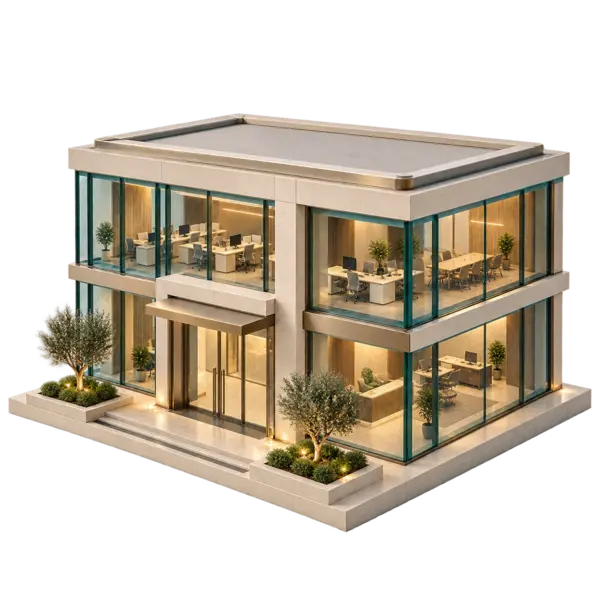 Private enclosure
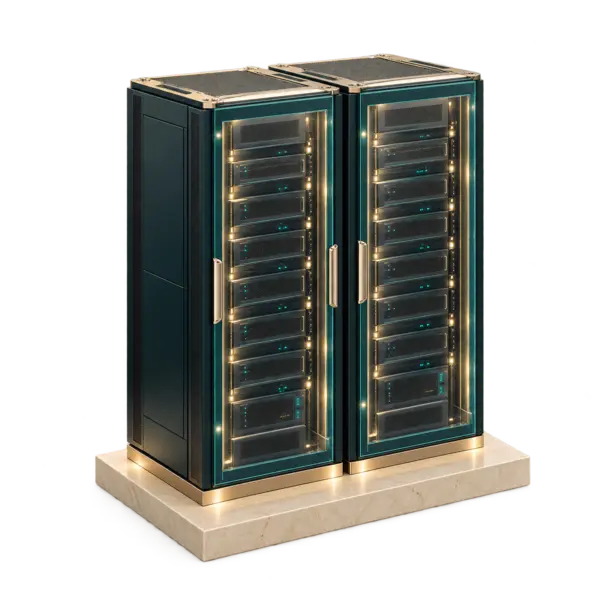 Racks and power
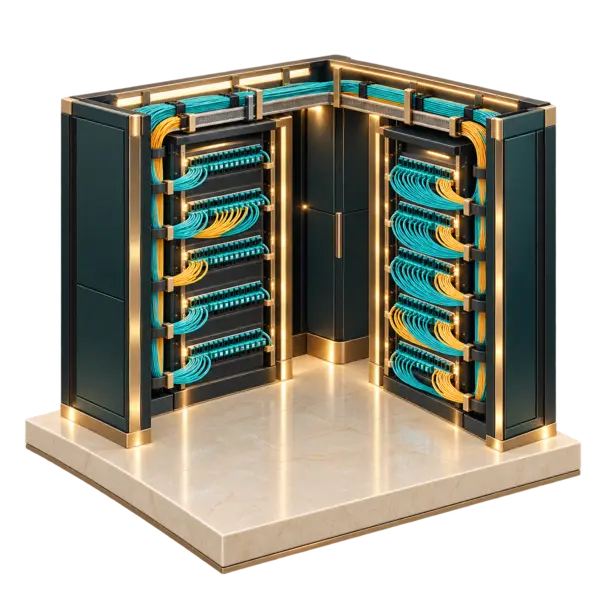 Interconnection point
The enclosure is not the rack
The cage defines private space for racks, aisles and cabling. Agree layout, access control, rack ownership and site power/cooling.
Network connectivity still requires defined handovers and cross-connects. Customer systems management remains a separate responsibility.
Private enclosureRacks and powerInterconnection pointGrow without breaking the design
Review density, load distribution, airflow and power capacity before adding equipment. Free floor space does not prove usable power is available.
Reserve cabling paths and maintenance space. Orderly growth avoids physical dependencies that become difficult to change once service is critical.
Private enclosureRacks and powerInterconnection pointProtect power, network and access
Separate power, network, equipment and physical-access risks. Alternatives should cover intended failure domains inside and outside the enclosure.
Agree notifications, authorised people and intervention procedures. Whole-site contingencies require assessing a second location and the data plan.
Illustrative case: from situation to decision
- Situation
- A multi-rack deployment needs controlled access and space for growth.
- Option
- Compare a private enclosure with individual cabinets by density and operations.
- Check
- Review layout, power, cooling and entry procedures before installing equipment.
A cage is an equipment enclosure; physical privacy does not equal complete high availability or logical security.
Decisions for your project
- Physical design
- Racks, aisles, access, cabling and expansion.
- Density
- Power, cooling and capacity during contingencies.
- Responsibilities
- Equipment ownership, intervention, maintenance and external connections.
From design to operation
Define layout and demand, validate the site and coordinate installation, interconnection and operational acceptance.
Complements, alternatives and variants
Product sources
What challenge would you like to solve?
Tell us what is happening and what needs to change. You do not need to know the catalogue.
What happens next?
- Understand the context
What’s changing, where your teams work and what cannot fail. Still defining the brief? We can help structure it.
- Design the options
Bring needs, Colt capabilities and technical criteria together. Compare alternatives and explain dependencies and limits.
- Validate before committing
Coverage, feasibility, responsibilities and terms. A commercial proposal is developed with the relevant specialists.
ColtPlatinum guides the project and coordinates commercial discussions and follow-up. Colt validates feasibility, enters into the service contract, and provisions, installs and delivers the services.
Availability, coverage, capabilities, SLAs and timelines are subject to technical validation and contract. No diagram is a service guarantee.