DCA Router
Connect cloud networks with defined routes and responsibilities.
Dedicated Cloud Access (DCA) Router provides managed Layer 3 (L3) routing. It suits multiple domains; map who can communicate with whom before defining routes.
NAT, ASN, route propagation, redundancy and failure domain must be agreed before activation.
Let’s talk
How it works
Connect locations and clouds without making routing a black box.
Possible origins
 Office / site
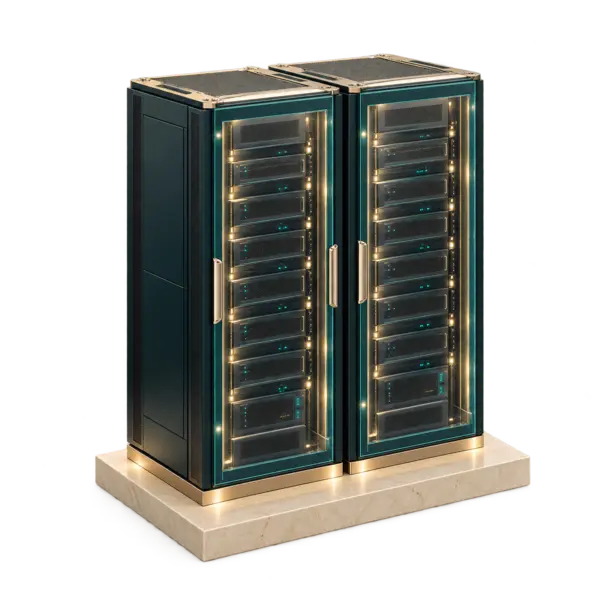 Data centre
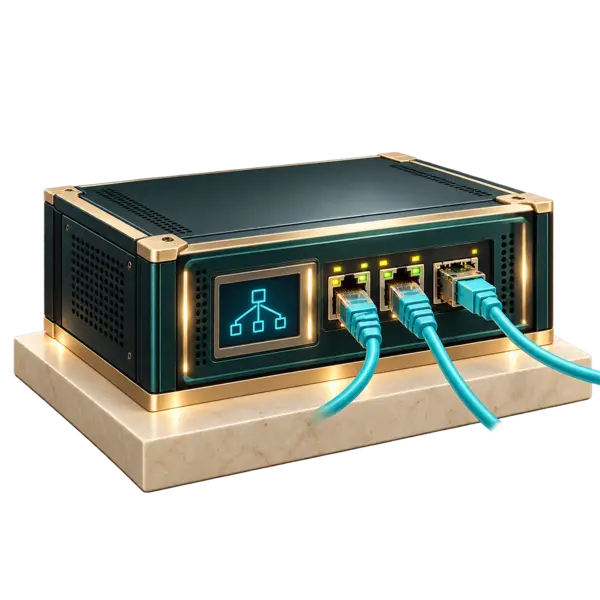 DCA RouterManaged routing
 Cloud region ACloud region B
The function is routing, not hosting
DCA Router is a managed Layer 3 function connecting agreed cloud domains. A project can start from an office or data centre, or connect clouds without backhauling through a site.
Define prefixes, route exchange and isolation. The diagram represents a network function, not necessarily a physical appliance at the office or a compute platform.
Possible origins
Office / siteData centreDCA RouterManaged routingCloud region ACloud region BConnected does not always mean reachable
When one domain cannot reach another, check advertised and accepted routes, address overlap and return traffic. Then inspect CSP permissions and controls.
An overly broad route can expose unintended networks; a missing route can block service. Route changes need both connectivity and segregation tests.
Possible origins
Office / siteData centreDCA RouterManaged routingCloud region ACloud region BContinuity beyond the router
Analyse access, cloud on-ramps and dependencies of the managed function. With redundancy, define failed-route withdrawal and how traffic reaches the alternative path.
Test restoration and available capacity too. Multicloud does not mean an application can move between clouds without preparing data and services.
Illustrative case: from situation to decision
- Situation
- Two cloud regions share services but must separate production and testing.
- Option
- Agree a communication matrix and the prefixes advertised between domains.
- Check
- Test allowed and denied access, address overlap and return routes.
Managed routing does not imply included CPE, available NAT or automatically contracted redundancy.
Decisions for your project
- Domains and routes
- Prefixes, overlap, return routes and isolation.
- Functions and demarcation
- BGP, NAT if available, CPE, configuration changes and responsibilities.
- Continuity
- Cloud ports, access, reserve capacity and route tests.
From design to operation
Map domains and prefixes, agree the communication matrix and validate reachability and isolation before migration.
Complements, alternatives and variants
Product sources
What challenge would you like to solve?
Tell us what is happening and what needs to change. You do not need to know the catalogue.
What happens next?
- Understand the context
What’s changing, where your teams work and what cannot fail. Still defining the brief? We can help structure it.
- Design the options
Bring needs, Colt capabilities and technical criteria together. Compare alternatives and explain dependencies and limits.
- Validate before committing
Coverage, feasibility, responsibilities and terms. A commercial proposal is developed with the relevant specialists.
ColtPlatinum guides the project and coordinates commercial discussions and follow-up. Colt validates feasibility, enters into the service contract, and provisions, installs and delivers the services.
Availability, coverage, capabilities, SLAs and timelines are subject to technical validation and contract. No diagram is a service guarantee.